
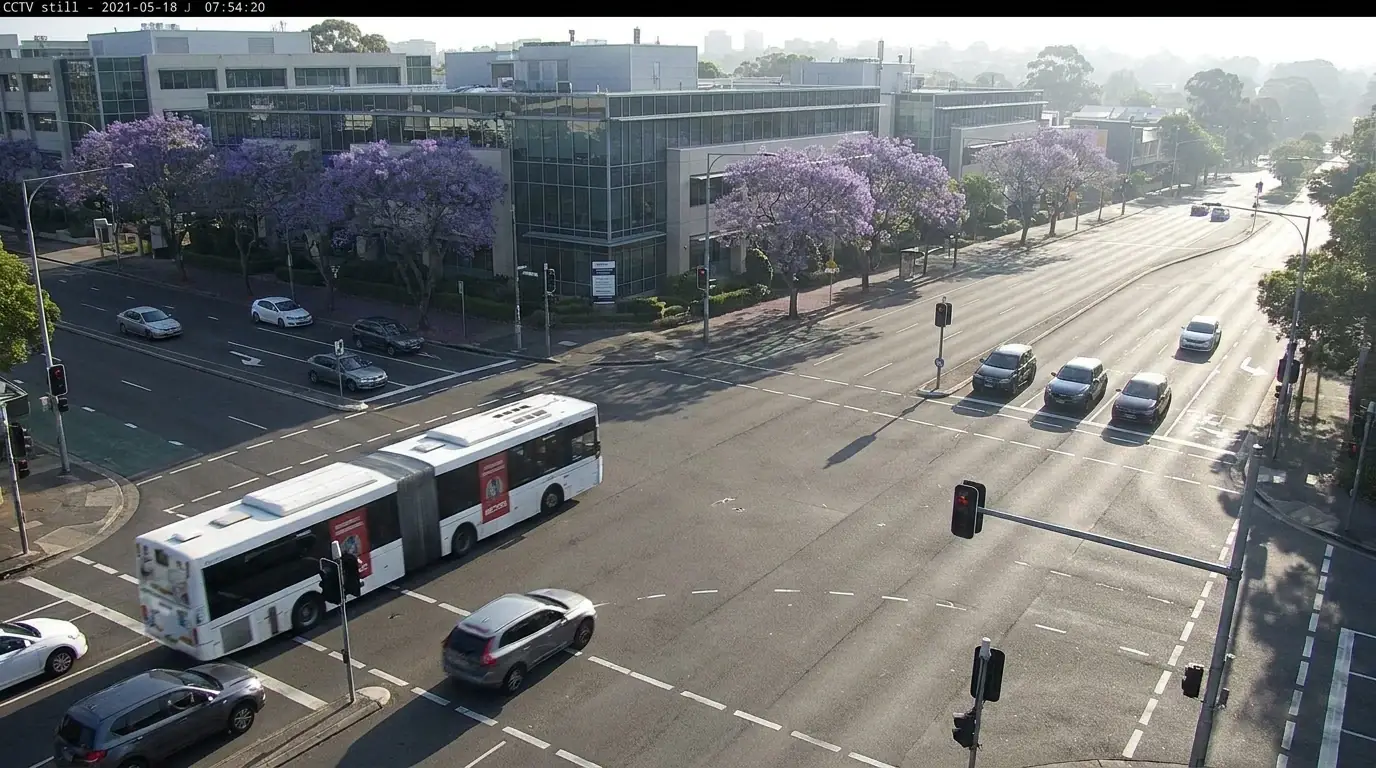
Traffic Betting Explained: How Live Car Counts Settle Bets
Traffic betting settles on what the camera model counts, not on what you notice. Drag the frame.
18+ Independent site, affiliate links · BeGambleAware
Round ≈ 55 sReturn 90.00–92.16 %Under · Over · Range · Exact
0vehicles boxeddrag the frame
Traffic betting is a live format where your bet settles on how many vehicles cross a marked zone on a real road camera. The genre was launched by 155 Media Studios on 28 January 2026 with Rush Hour: computer vision counts the cars, a round lasts about 55 seconds, and you back Under, Over, Range or Exact. The studio publishes the return band for Rush Hour at 90.00–92.16 %, and every round is committed as a SHA-256 hash before betting closes, so the result can be checked afterwards. No random number generator is involved — the road is the generator, and the house margin still applies.
What is fixed and published
Eight lines that do not move, taken from the studio's own game pages and checked on 21 September 2026.
- Genre
- CCTV Game
- Launched
- 28 Jan 2026
- Debut title
- Rush Hour
- Studio
- 155 Media Studios
- Round length
- ≈ 55 s65 an hour
- Markets
- Under · Over · Range · Exact
- Published return
- 90.00–92.16 %
- Feeds
- Seven cities, 24/7



What traffic betting actually is
No teams, no fixtures, nothing to wait for. A fresh round opens about every minute on every feed.
No symbols and no random number generator. The number is produced by a public road with strangers driving on it.
A camera, a zone drawn across the lanes, a model that counts crossings, and four ways to bet on that count.
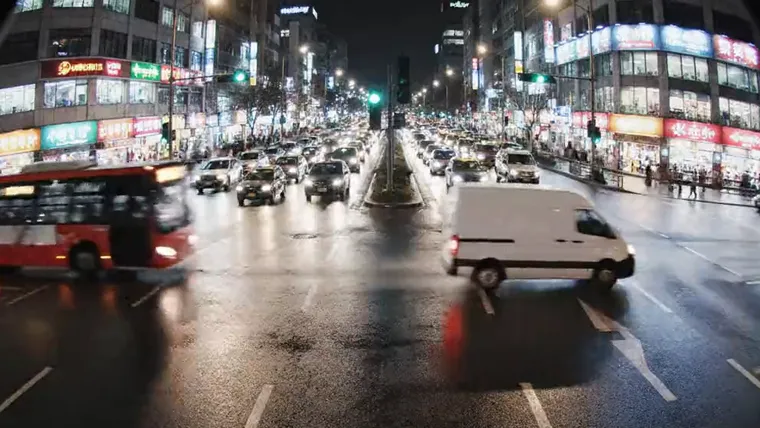
A detection zone is drawn on the live frame, the round runs for about 55 seconds, and a computer-vision model registers every vehicle that crosses it. When the window shuts, that number settles the market the same way a final score settles a football bet. People search for it as traffic gambling or a traffic bet; on the studio's side the category is called a CCTV Game.
The gap from sports betting is supply: no fixture list, so the next round is always under a minute away. The gap from a slot is the source of the number — nothing spins, because rush hour is unpredictable enough already. Neither makes the format kinder to a bankroll.
- Studio
- 155 Media Studios (155.io)
- Where the name comes from
- The 155 mm screen of the iPhone 15
- Founded
- 2024
- Founder and CEO
- Sam Jones
- Slogan
- Betting on Chaos
- Genre launched
- 28 Jan 2026
Where the model draws the line between a van and a bus, and what it misses in rain, is a longer story: we take the frame apart on what the detection zone counts and misses.
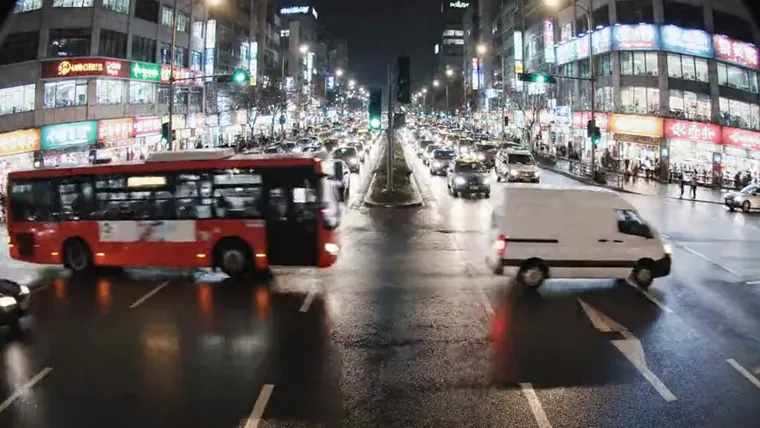
0counted
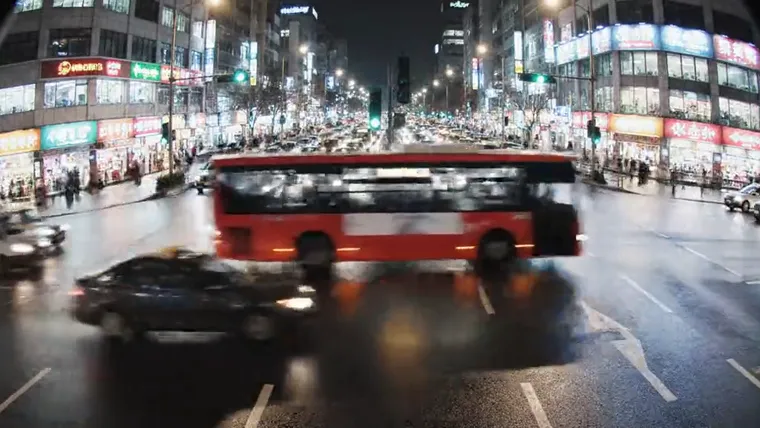
6counted
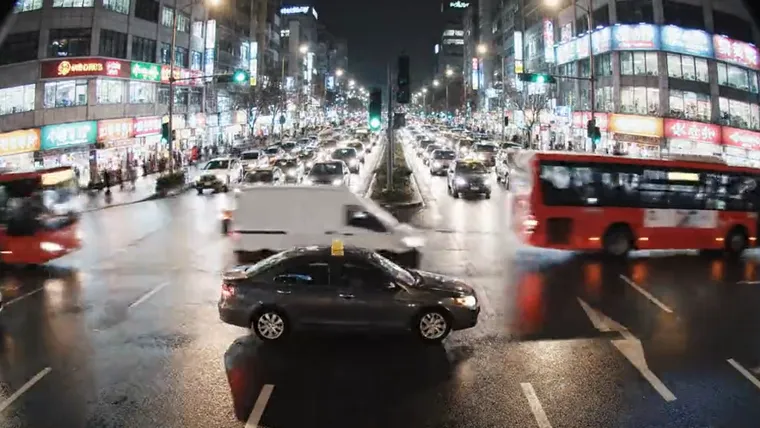
12counted
17counted
How one round is settled
Replay · example round · settled on 17 vehicles · length ≈ 55 s
- 01Feed A city camera streams into the studio, around the clock.
- 02Zone A detection line is drawn across the lanes before the round opens.
- 03Open You take Under, Over, Range or Exact against the posted line.
- 04Close Betting shuts while the window is still running.
- 05Count Computer vision boxes every vehicle that crosses. No human tallies.
- 06Settle The count pays the market. Door to door, about 55 seconds.
The important word is machine. Nobody watches the frame and taps a counter: the model tracks objects and registers the moment each one crosses the line, which is why two people replaying the same clip always get the same number out of it.
Betting closes before the window ends, so the last seconds are watched, not traded. When the count stops, every market on that line resolves at once and the next round is already opening — roughly 65 of them fit into an hour, which matters more for a bankroll than any single result.
Nothing about the road is smoothed out on the way to the screen. A lorry blocking two lanes, a light that stays red too long, roadworks: it all lands in the count. That is the trade — the event is genuinely unpredictable, and its price is set in advance by the published return.
The counting itself — zones, angles, occlusion, headlight glare — is unpacked on the page about traffic cam betting.
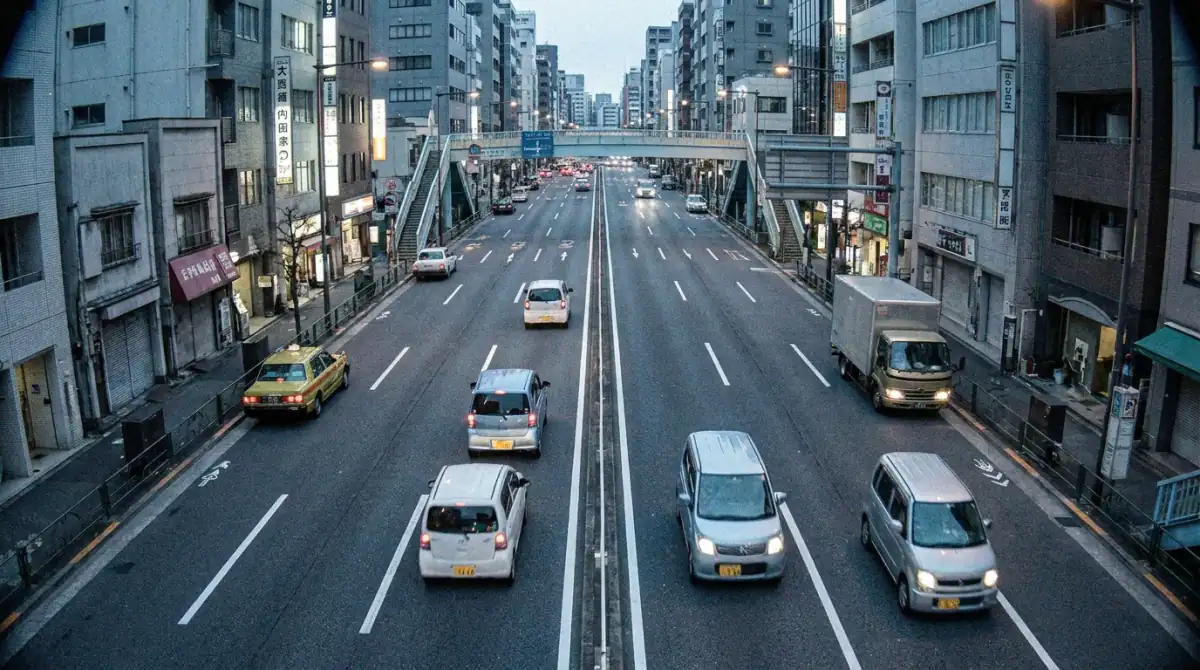 Detection zone 16crossings Betting closes 00:12
The four markets
Three bets cut the line into blocks with no gap between them, so one of the three always comes in. The fourth sits on a single number inside the middle block — which is why Range and Exact can pay on the same round. Drag the detection box to settle on any count.
Settled on 17 · Range 15–17 pays 22.80 on 10.00 per market
Under and Over take the wide blocks either side: they come in often and pay modestly. Range takes the three numbers in the middle, where a busy road usually lands, so it is the shortest price on the board. Exact keeps one number — which is why it pays around eighteen times the stake and loses on almost every round.
Prices here illustrate the shape of a board, not a live quote: they return about 91 %, inside the 90.00–92.16 % band the studio publishes for Rush Hour.
The line is not a constant either. Bucharest at three in the morning and Tokyo at eight in the evening produce different counts from the same 55 seconds, so an Over 17 is cheap on one and a long shot on the other. The full board sits on the traffic betting game page; what that turnover costs is in the bankroll guide.
The return is published — 90.00–92.16 %
155 Media Studios states the return band for Rush Hour on its own game page: 90.00–92.16 %. It is a band and not a single figure because the return depends on the market you take — the four bets on one line are not priced identically, so the house edge moves between roughly 7.84 % and 10.00 % depending on where you put the stake.
The rest of the studio's line-up is published the same way, and the numbers are not identical: Coin Flip sits at 90.91 %, Fast Lane at 92.95 %, Footfall at 94.00 % with no cap on the count, and Survivor runs from 95.39 % to 96.47 %. Rush Hour sits at the tighter end of that list: the title that made the genre famous is also one of the more expensive to sit in front of.
Real traffic instead of a generator changes what the event feels like, not what it costs. At 65 rounds an hour and a flat stake of one unit, a 90.00–92.16 % return means an expected loss of about 5.10–6.50 units per hour of continuous play — before a single bad run. That arithmetic is the whole subject of the bankroll page.
Twelve titles, one studio, four operators
Rush Hour is built by 155 Media Studios and distributed through the aggregator Hub88, exclusive since 26 February 2026. Every title publishes its own return band — these are the ones the studio states.
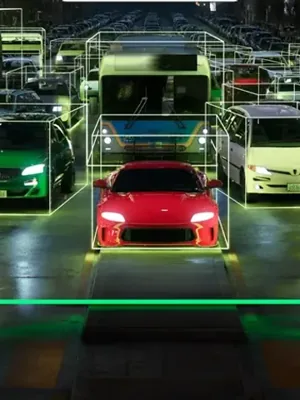 Rush Hour90.00–92.16 %
 Footfall94.00 %
 Fast Lane92.95 %
 Snow Runup to 18×
 Duck RiverCCTV genre
 Fish Tank91.10–92.12 %
 Stairpong90.62–91.64 %
 Rolling Dunes90.26–95.90 %
 Snake91.87–96.42 %
 Marble Plinko87.81–93.25 %
 Coin Flip90.91 %
 Survivor95.39–96.47 %




Every round leaves evidence
A SHA-256 hash of the round is posted before betting closes.
a91f3c…7e40The seed is published together with the settled count.
seed 4d1b…c0a2Hash the seed yourself and compare it with the commit.
hash == commit
The commitment is what makes the count checkable after the fact: a hash that is published before the window shuts cannot be rewritten once the cars have gone past. The seeds are links in a chain fixed in advance, so a single round cannot be swapped out without breaking every round that follows it. Probabilities are published, the verifier is open, the specification lives at docs.155.io, and any round can be pulled up by ID in the public lookup.
In practice the check takes a minute: keep the round ID from your bet slip, paste it into the public lookup and read back the commit, the revealed seed and the settled count. If the recomputed hash matches the one posted before the window shut, the round stands as published — and a mismatch would be visible to everybody holding that ID, not just to you.
One honest limit on all of this: verification proves that a round was not tampered with. It says nothing about whether the bet was worth taking — that question is answered by the return band above, and it is answered the same way for everybody. Example strings shown here are illustrations of the format, not a captured round.
Seven cities, running 24/7
Local time updates in your browser — the clock tells you which cameras are awake right now.

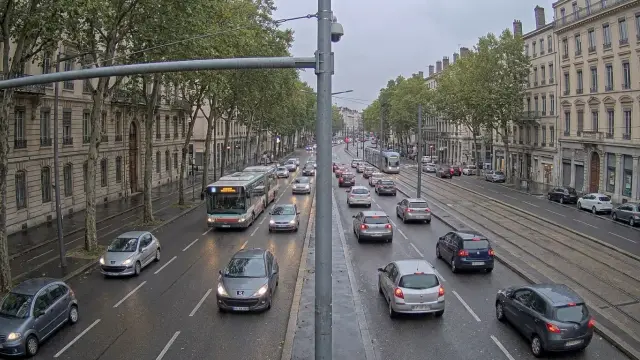
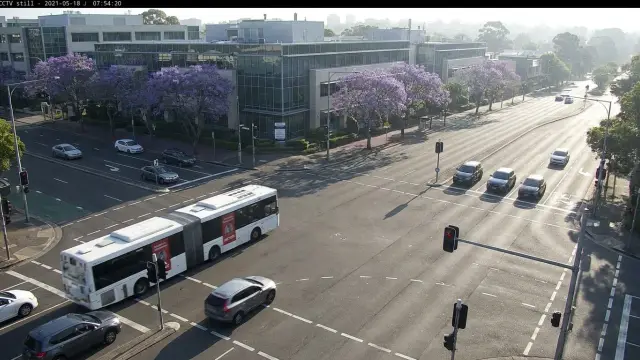
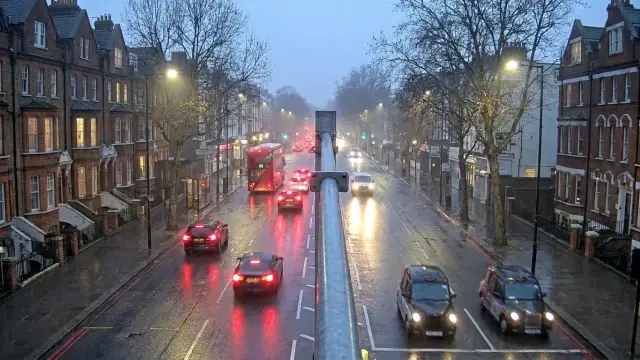
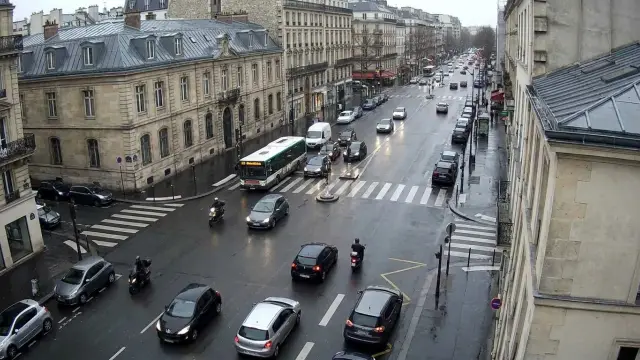
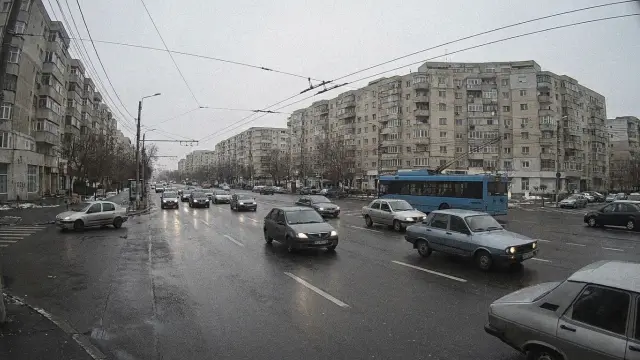
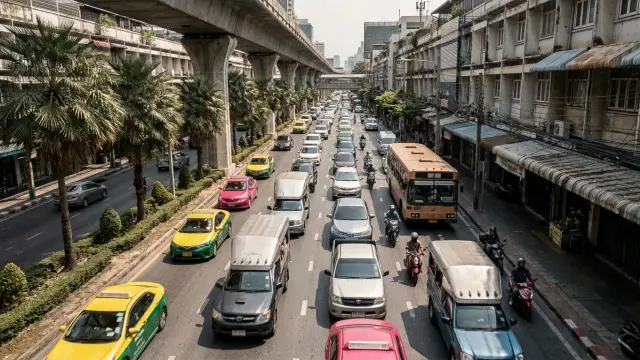
Tokyo, Lyon, Sydney, London, Paris, Bucharest and Bangkok are in rotation, broadcast around the clock from the studio's own feeds, and the line-up grows most months. The practical consequence is a time-zone one: when Europe goes quiet at two in the morning, Sydney is in the middle of its afternoon and Tokyo is heading into the evening, so there is always a camera with real traffic on it.
The feeds are not interchangeable either. A four-lane avenue fills the detection zone far faster than a two-lane street, a camera pointed down the carriageway sees a queue differently from one mounted across it, and a junction with a light cycle arrives in bursts rather than a steady flow. That is why the posted line moves from feed to feed and from hour to hour: the same Over is a different bet in Bangkok at rush hour and in Lyon at dawn, even though the markets on screen look identical.
Which feed suits which hour, and why the stream delay hands nobody an edge, is covered on the live traffic betting page.
Why this domain is spelled the way it is
The address of this site carries the common misspelling with a single t. The format is spelled traffic betting, with two, and that is the spelling used everywhere on this site — in headings, links, alt text and in the sentence you are reading. The domain is just a doorway that matches what a lot of people type.
Nothing else changes with it: same genre, same studio, same published numbers. Search engines treat both forms as one query. And to say it plainly — this is an independent editorial site: no lobby, no licence, no deposits, and no relationship with 155 Media Studios beyond writing about what it publishes.
FAQ
What is traffic betting?
A live format where your stake settles on the number of vehicles crossing a marked detection zone on a real road camera. 155 Media Studios launched the genre on 28 January 2026 with Rush Hour, and a round runs for about 55 seconds before the count closes.
Is traffic betting random like a slot?
No random number generator produces the count; real road traffic does. That makes the event unpredictable rather than mathematically random, and it does not improve your odds — the published return band for Rush Hour is 90.00–92.16 %. The margin is built into the prices on the markets, exactly as it would be with a generator behind the screen.
What is the RTP of traffic betting?
155 Media Studios publishes Rush Hour at 90.00–92.16 %. It is a band rather than one figure because the return depends on which market you take: Under, Over, Range or Exact. Other titles from the same studio are published separately, from 90.91 % on Coin Flip up to 96.47 % on Survivor.
Can I check that a round was fair?
Yes. Each round is committed as a SHA-256 hash before betting closes and the seed is revealed after settlement, so anyone can recompute the result. Round IDs can be looked up in the public verifier, and the specification behind the chain of seeds is published at docs.155.io.
How long is one traffic betting round?
About 55 seconds in Rush Hour, which is why the game runs continuously instead of on a schedule and why roughly 65 rounds can pass in an hour. That speed, not any single result, is what empties a bankroll fastest.
Which cities can I watch?
Seven live feeds are in rotation: Tokyo, Lyon, Sydney, London, Paris, Bucharest and Bangkok. They run around the clock, so there is always a busy camera somewhere, and the studio has kept adding cities since the genre launched.
Who this format is for
You want a short round you can watch from start to finish, a result you can recheck afterwards, and a betting screen with no spinning symbols on it.
You are looking for a system. Real traffic has no sequence to read, no hot feed and no due number — and the published band is the studio saying the margin stays. A round a minute makes that margin arrive faster here than almost anywhere else.
18+. Betting is entertainment, not income. A published return of 90.00–92.16 % means a long-run loss, and about 65 rounds an hour makes it arrive fast. Set deposit and time limits before the first round — see responsible gambling or BeGambleAware.