14crossings registeredexample window
Traffic Cam Betting: What Computer Vision Counts and Misses
Traffic cam betting settles on what a model counts in the frame: the objects that cross the detection zone, not the ones that simply sit inside it.
18+ Independent site, affiliate links
Crossing counts, presence does notRound window ≈ 55 sSeven city feeds, 24/7
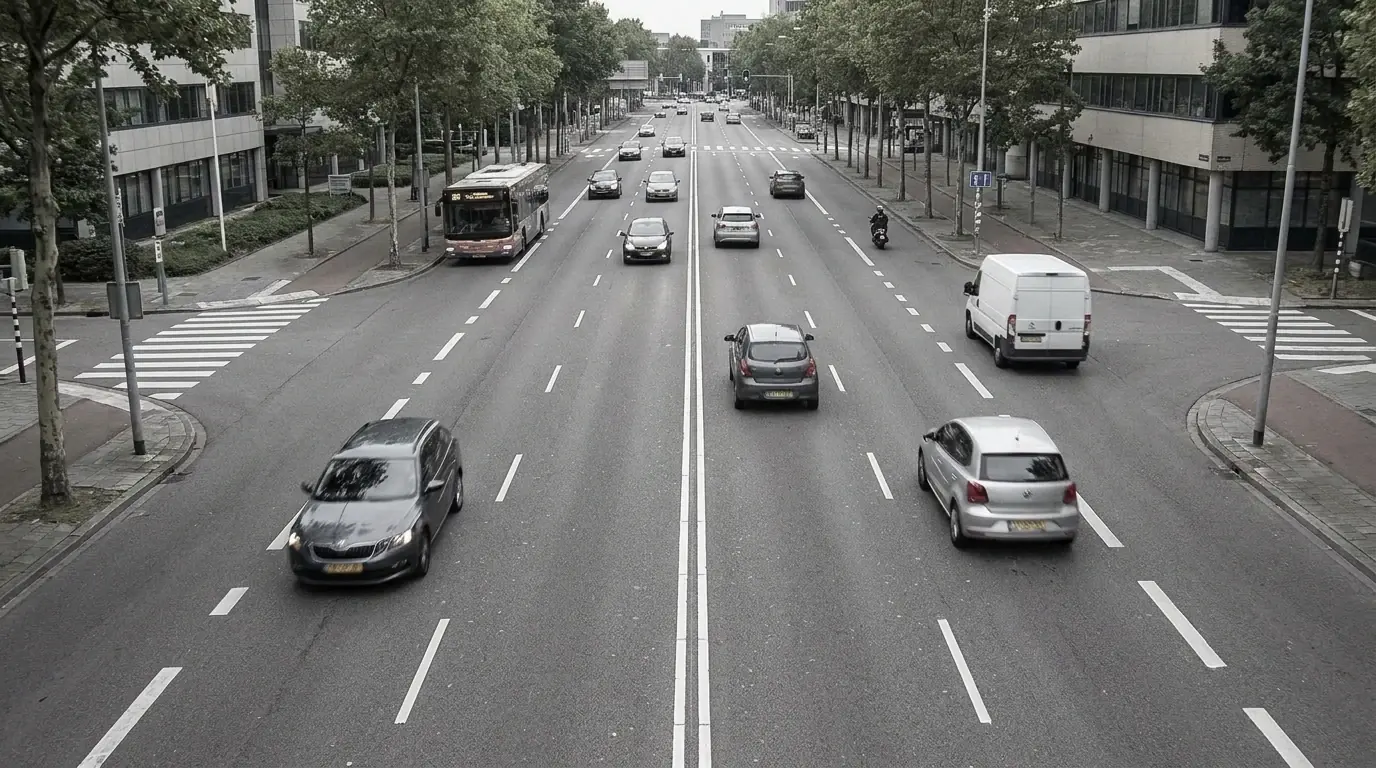
Traffic cam betting settles on a machine count. A detection zone is drawn over the live camera frame, and a computer vision model registers every tracked object that crosses it during the round window of roughly 55 seconds. That is why the camera angle, the number of lanes and the lighting matter more than any intuition about traffic — the same street can produce very different totals from two different viewpoints.
What the machine actually does
Six things every feed does the same way, every round.
- Detection zone
- A marked area drawn on the live frame
- Object tracking
- The model follows each object across frames
- Registration
- One count when the boundary is crossed
- Round window
- About 55 seconds, then the count stops
- Settlement
- Automatic; no human tallies the frame
- Result
- Visible in the same frame you watched
The detection zone, step by step
A detection zone is not the whole picture. It is a marked area inside the camera frame — usually a band drawn across the lanes at a point where the road is clearly visible — with one edge acting as the boundary that decides the count. Everything the model does happens in those coordinates: an object is picked up, given an identity, followed from frame to frame, and checked against that boundary. The frame itself never moves, so the zone stays in the same place for every round on that feed.
Tracking is what separates a count from a headcount. Because the model keeps an identity for each object, a car that is visible for forty frames is still one car, and it can only be registered once. The trigger is the crossing itself: the tracked point moves from one side of the boundary to the other, and the counter goes up by one. Entering the frame is not enough, and neither is sitting in the zone.
That last point is the one that costs people money. A queue of eight cars standing on a red light inside the zone is worth nothing to the count until the light changes and they move across the line. A quiet street where traffic never stops can post a higher number than a busy one that spends half the window stationary. The count measures passage, not presence, and the two look identical on a still image.
How that zone sits inside a 55-second round is set out in the round in full.
What gets counted on a road feed
A road feed carries more than cars. Vans, buses, lorries, motorbikes, scooters and bicycles all move through the same lanes, and a vision model can be configured to register any of them. Which classes a given camera counts is a property of that feed, not of the genre: the game states what it treats as a countable object in the lobby description, and that is the only source worth trusting.
Bicycles and scooters
Small, quick and often alongside a car instead of behind it. In Bangkok and Paris this class carries a large share of the flow.
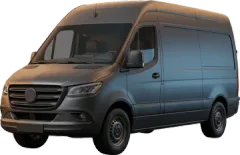
Vans and light trucks
Easy for the model, awkward for everything behind them: one van in the near lane can hide two cars in the far one for the whole crossing.
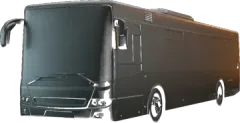
Buses and coaches
One object, one count, however long it is. A bus crossing the boundary adds the same single unit to the total as a hatchback.
City composition is the reason a number from one camera says nothing about another. A London arterial is dominated by cars, vans and double-deckers; a Bangkok junction adds a constant stream of motorbikes that can double the object count for the same volume of metal. Read the classes the game lists for your feed, and where the game does not publish this per feed, do not fill the gap with a guess.
Which cameras run when, and how the rotation of seven cities works, is on the feeds that run around the clock.
Why the angle changes the numbers
Point two cameras at the same street and you get two different games. An overhead mount sees every lane cleanly, because nothing can hide behind anything else. A camera shooting down the carriageway compresses the same traffic into one line of sight, so a lorry erases whatever is behind it. A junction camera often covers the near lanes only.
Gantry mount, looking straight down at four lanes. Nothing hides behind anything; the zone sees the full width.
- Registered
- 25
- Occlusion
- 4 %
26 vehicles pass · 4 of 4 lanes in zone · 4 % occluded → 25 registered
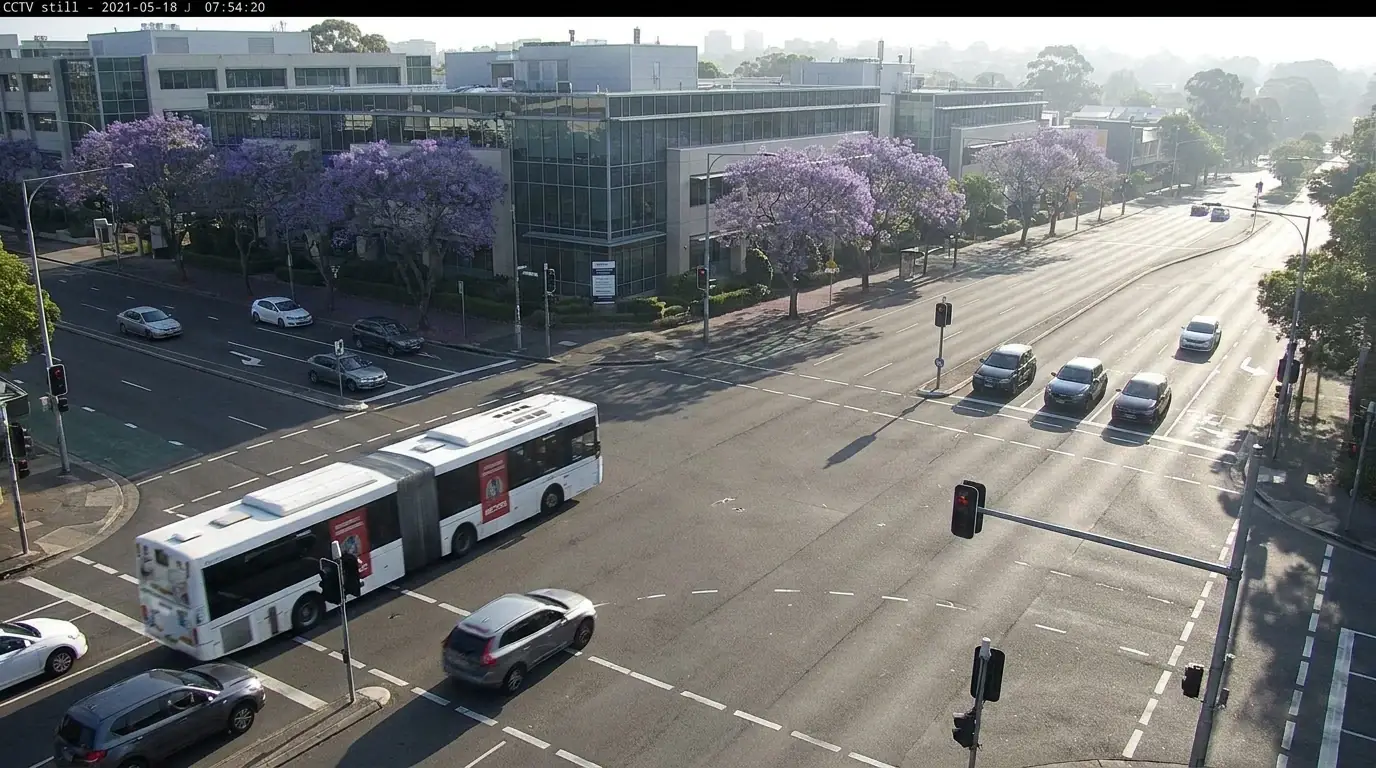
Pole mount, shooting along the road. Depth stacks the lanes and large vehicles screen the ones behind.
- Registered
- 20
- Occlusion
- 23 %
26 vehicles pass · 4 of 4 lanes in zone · 23 % occluded → 20 registered
Mounted across the crossing. The zone reaches the two near lanes only, and traffic arrives in light-cycle bursts.
- Registered
- 12
- Occlusion
- 11 %
26 vehicles pass · 2 of 4 lanes in zone · 11 % occluded → 12 registered
Illustrative example built on one assumed flow of 26 vehicles, not a measurement published by the studio.
The practical rule is narrow: a baseline belongs to one camera. Carry a number from Sydney to Bangkok and you are reading the wrong street.
Night, rain and headlight glare
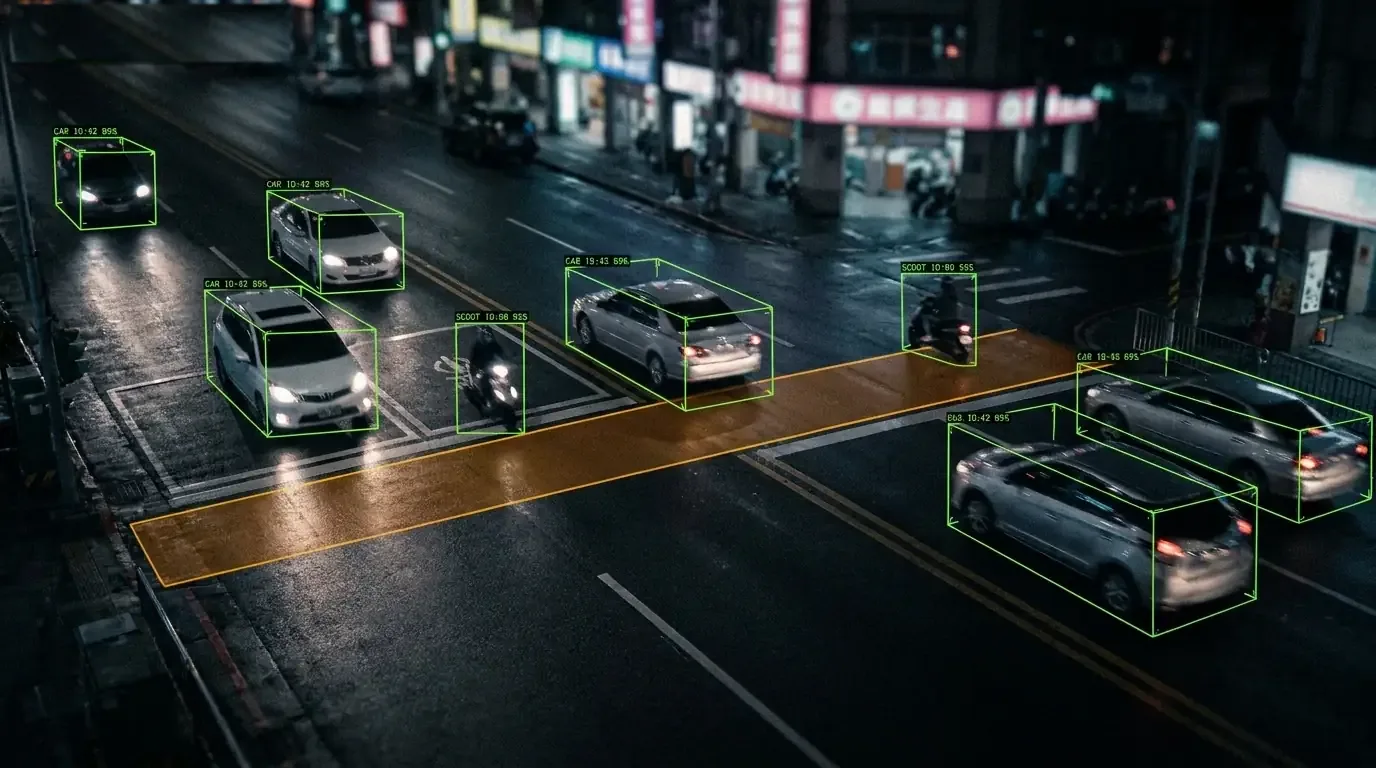
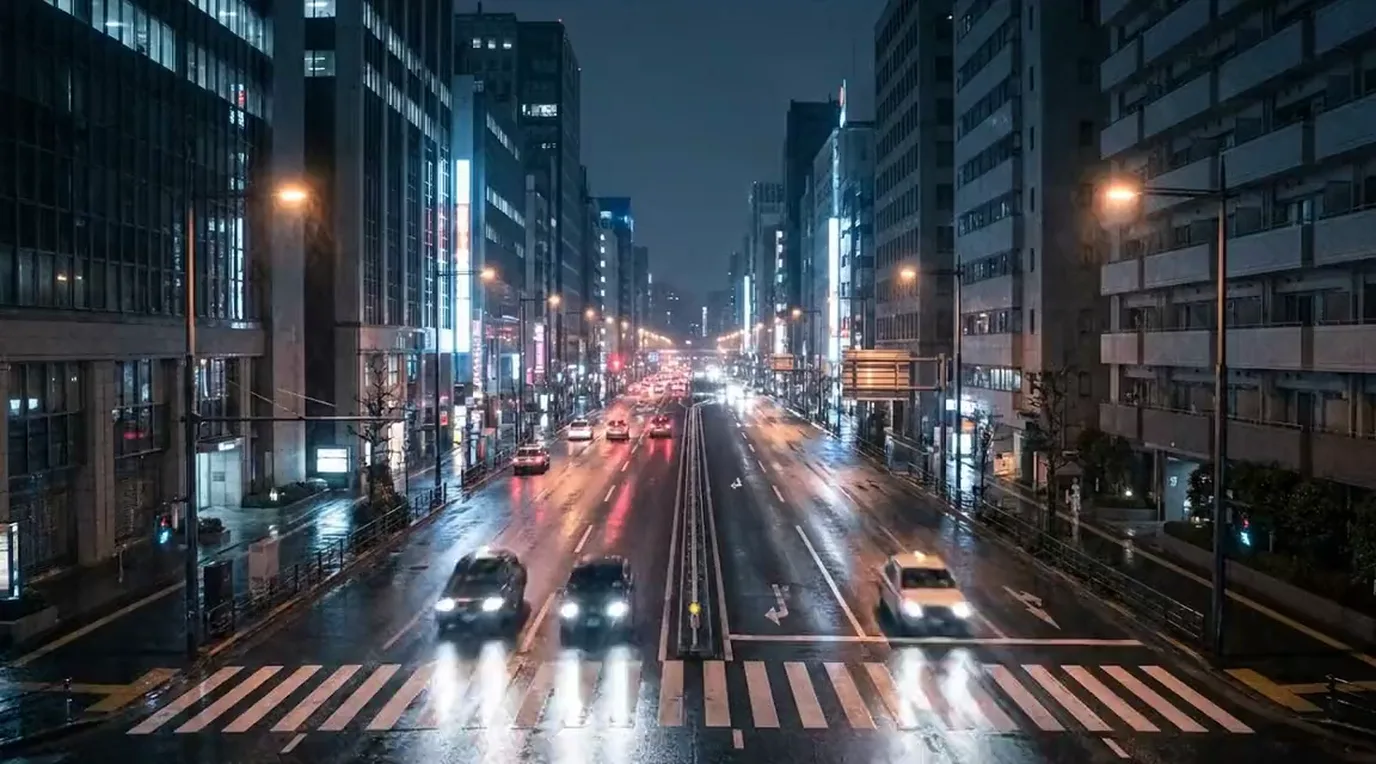
Darkness does not switch the model off, it changes what the image gives it. Headlights bloom into the lane beside them, wet tarmac turns every lamp into a second light source, and a drop of rain on the housing smears one corner of the frame for an hour. Separating two close objects is harder under those conditions than at noon, and the model has less to work with in exactly the moment the road is emptiest.
- Headlight bloom
- Bright cores spread past the body of the car.
- Rain on the housing
- One corner of the frame stays soft until it dries.
- Low contrast
- Dark vehicles merge with dark tarmac between lamps.
The honest version of this is duller than the conspiracy. We do not know how often the model is wrong at night, because the studio does not publish an error rate, and no one outside it can measure one from a stream. What is obvious from the frame is that night traffic is different traffic: fewer vehicles, faster ones, longer gaps. Comparing the spread of a 3 a.m. round with a 6 p.m. round is comparing two roads, not two lighting conditions.
Reading a feed before you bet
Four things worth checking, and one thing checking will not do.
- 01Typical count Watch three rounds and note where the settled number lands. That is your baseline for this camera and nothing else.
- 02Spread between rounds The gap between the lowest and highest of those three tells you more than their average does.
- 03Window length Confirm the round runs the roughly 55 seconds you expect before you size anything against it.
- 04Light phase Note whether the flow is steady or arrives in bursts. Bursts widen the spread on the same street.
Three rounds cost nothing and take under three minutes. What they buy is context: whether a count of nineteen on this camera is ordinary or unusual, and how far the numbers travel between rounds. Most people skip it, because the next round is always forty seconds away.
Here is the limit, stated plainly. Watching does not give you an edge. The posted line is built on the same feed you are watching and moves with it, so a camera that reads as easy is simply a camera with a shorter price on the obvious side. Observation explains the spread; it does not beat it. What each count pays is on the game page, and what the clock costs is in round speed and bankroll.
If any of that is new, start with what traffic betting is and come back to the camera afterwards.
FAQ
Five questions about the count itself. The answers stick to what 155 Media Studios publishes and to what can be seen in the frame; where a figure is not published, we say so.
How does traffic cam betting count vehicles?
A computer vision model tracks moving objects on the live feed and registers each one that crosses the boundary of a predefined detection zone. Crossing is what counts, not being present in frame.
Does the camera count motorbikes and bicycles?
Detection is configured per feed, and traffic composition differs sharply between cities. Check what the game states for the camera you are watching rather than assuming cars only.
Does rain or darkness change the result?
Lighting and weather change how cleanly objects separate on the image, and night traffic is different traffic in the first place. Comparing a night feed with a daytime feed directly tells you very little.
Are some cameras easier to bet on?
Feeds differ in angle and lane count, which shifts the typical count and its spread. Easier to read is not the same as better value: the line moves with the feed.
Can I verify the count myself?
You watch the same footage the count is taken from, and the round itself carries a SHA-256 commitment that can be recomputed after settlement. What is not open to inspection is the detection model.
Round IDs and the verifier live at docs.155.io; the checks that apply to every round are the same on every camera.
Transparent, not easier
A camera does not make the bet fairer or softer. What it changes is visibility: the event that settles your stake is playing out on screen, in public, and the count that resolves it is reproducible from the same footage. That is transparency, not an advantage. The angle, the lane count and the weather move the numbers around, the published return of 90.00–92.16 % stays where it is, and the machine keeps counting crossings whether you are watching or not.
18+. Betting is entertainment, not income. Rush Hour publishes a return of 90.00–92.16 %, which is a long-run loss at any angle, in any weather. Reading the feed does not change that. Set a deposit limit and a session limit before the first round — see responsible gambling or BeGambleAware.